This year, early-run coho are still climbing the Clackamas River in mid-November, after last year's early run had mostly faded. On Nov. 12, 2026, Portland General Electric's North Fork Adult Trap counted 74 early-run coho and 30 late-run coho. On Nov. 12, 2025, the same trap counted no early-run coho and 67 late-run fish. That puts this fall's early run about a week behind last fall's. The fish that spawn this month were still arriving well into November, and November is the month state biologists name for seeing coho upriver from Clackamas.
The Clackamas has two coho runs, and they arrive one after the other
The early run and the late run are separate groups of fish on separate schedules. Portland General Electric describes the early run as a naturalized run of hatchery origin that is now mostly wild. The hatchery fish come from Eagle Creek National Fish Hatchery, and they don't travel upstream past Eagle Creek. The wild early-run fish keep going into the upper Clackamas and its tributaries, and the early run spawns from October through November.
The late run is entirely wild. PGE puts its peak migration from November through January and its spawning from January through April. Most of those fish spawn above North Fork Dam, though some reproduce in the lower river.
That sequence sets the calendar for anyone who wants to see a salmon this year. November is the overlap month. The early run is finishing at its spawning grounds while the late run is still traveling. The Oregon Department of Fish and Wildlife's See salmon spawn guide gives November as the coho viewing month for the Clackamas County area.
How this year's run compares with last year's
The counts come from one place. PGE's North Fork facility sorts wild fish from hatchery fish and releases the wild native fish above North Fork Dam. Its daily sheet is a count of fish passing that point, not of every coho in the river. Because the same trap counts every year, the numbers still show how one season compares with another.
| North Fork Adult Trap, in-season totals | 2025 | 2026 |
|---|---|---|
| Early-run coho counted in September | 4,685 | 1,834 |
| Early-run coho counted in October | 3,547 | 1,123 |
| Early-run coho, run total through Oct. 31 | 8,243 | 2,959 |
| Early-run coho, Nov. 1 through Nov. 13 | 574 | 539 |
| Late-run coho, Nov. 1 through Nov. 13 | 768 | 107 |
PGE's 2026 sheet shows 3,498 early-run coho and 122 late-run coho through the Nov. 13 reporting date. In 2025, the early-run total through Nov. 13 was 8,817 and the late-run total was 825. Both years are in-season tallies, not final returns.
The daily rows show how differently the two Novembers went. In 2025, the early run dropped to 11 fish on Nov. 8, the same day the trap counted 109 late-run coho. After that, the early run never topped a dozen fish a day in the rows through Nov. 15. In 2026, the early run counted 64 fish on Nov. 9, 68 on Nov. 11, 74 on Nov. 12 and 49 on Nov. 13. Late-run fish are only starting to show up, with 22 on Nov. 11 and 30 on Nov. 12.
So the run is smaller this year, and the early fish are still coming upstream in the second week of November. Those early fish are the ones that spawn this month, which is why the two viewing spots below are worth a trip before December.
Eagle Creek National Fish Hatchery, where the hatchery coho come back
The hatchery-origin part of the early run returns to Eagle Creek National Fish Hatchery at 34288 SE Rainbow Road in Estacada. Admission is free, and the U.S. Fish and Wildlife Service lists hours of 6:30 a.m. to 3 p.m. Plan a morning trip. A visit after a late lunch leaves very little time before closing.
The hatchery says adult coho return in late September, October and November. On selected days during those months, visitors can watch the crew spawn fish, and staff will answer questions and give tours when they have time. The hatchery doesn't post a public calendar of spawning days, so check before you go if seeing the crew at work matters to you. Juvenile fish are on site all year, so a trip after the adults are gone still shows the early stages of the same run.
Eagle Creek is a tributary in its own right, not just the site of a hatchery. The Clackamas River Basin Council counts coho as part of Eagle Creek's natural fish heritage and says coho spawn and rear in its streams and low-gradient tributaries. At Bonnie Lure State Park, the council placed more than 150 logs in Eagle Creek side channels to improve habitat for coho, spring and fall Chinook, and lamprey. Juvenile fish were already using the new habitat when the council reported on the project in 2020.
Clear Creek at Metzler Park, for coho in a natural creek
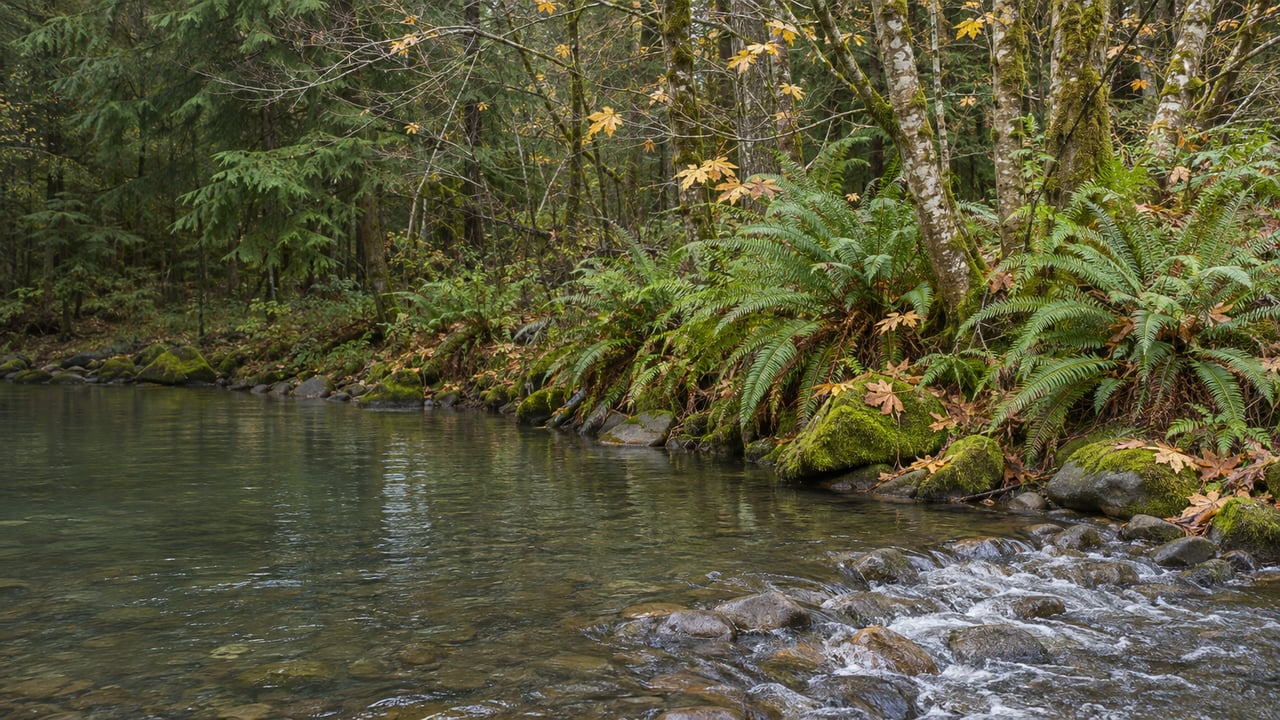
For coho in a natural creek, ODFW's guide points to the county park about five miles south of Estacada and says it has good access to Clear Creek, a Clackamas tributary. Clackamas County spells the park's name Metzler Park, and its address is 24526 S. Metzler Park Road, Estacada.
The county describes the park as surrounded by hills of tall Douglas-fir and western red cedar. It has 2.5 miles of trails and lists Clear Creek for fishing. Day use runs on winter hours from Nov. 1 through Feb. 28, 6 a.m. to 6 p.m. The 75-site campground is open only May 1 through Sept. 30, so a November visit is a day trip. The county's 2026/2027 fee schedule lists a general day-use parking fee of $10 a day. Check the county fees page before you go, since the Metzler page doesn't list its own rate.
ODFW's guide also explains how to tell when salmon are spawning, which helps on a creek with no viewing window. Coho darken from silver to shades of red as spawning nears, and males grow hooked jaws. Females turn on their sides in gravel beds and use their tails to dig nests called redds. Males bite and chase each other to get close to the females. Battered carcasses along the bank are a good sign, because Pacific salmon die after spawning and their bodies feed the stream.
ODFW asks viewers to watch from a distance, bring binoculars and stay off the redds during and after spawning. It also suggests checking that a site is open before heading out.
Kellogg Creek, where the run is reaching closer to home
The places ODFW names for coho viewing sit near Estacada and beyond, not along the creeks that run past most Clackamas homes. That is changing in stages, and Kellogg Creek is the one to follow.
Kellogg Dam sits near the creek's mouth in Milwaukie. NOAA Fisheries says some Chinook and coho have made it upstream of the dam, but its poorly working fish ladder makes passage hard. Removing the dam is expected to open 17 miles of stream and restore about 15 acres of floodplain habitat. The City of Milwaukie's Kellogg Creek restoration page puts design and permitting through December 2027 and construction from 2028 through 2031.
Habitat work upstream has started before the dam comes out. Clackamas Water Environment Services has finished Upper Kellogg work between Clackamas Road and Thiessen Road. Crews removed and replaced driveway culverts, restored 750 feet of channel, planted native species and placed large wood in the creek. The county's 2025–26 RiverHealth grant report lists riparian restoration in the Rock Creek and Sieben Creek watersheds, plus continuing work at Parmenter Ponds in the Kellogg–Mt. Scott watershed.
Mount Scott Creek is part of the same system. The North Clackamas Watersheds Council's 2023 fish passage assessment says North Clackamas streams may support coho. It also lists partial barriers on Mount Scott Creek and crossings on Phillips Creek that fish can't get past. For a walk closer to home this month, our earlier post on Mount Talbert covers a different kind of outing.
The wild late run carries on into winter
Once the early run has spawned, the late run carries the season through winter. PGE's timing puts wild late-run coho on the move through January and spawning from January into April, mostly in the upper basin above North Fork Dam. Last year, the late run took over the trap's daily counts in the first week of November. This year it is only beginning in mid-November, with 107 fish counted from Nov. 1 through Nov. 13, compared with 768 over the same days in 2025.
You can follow along from home. PGE posts its Clackamas fish counts as a daily sheet. The early-run column shows whether the fish that spawn this fall are still passing the trap, and the late-run column shows how the wild run is building.
At TK Real Estate Group, we like keeping an eye on how Clackamas changes through the year, from a salmon run to a creek restoration. If you're curious how changes like the Kellogg Creek work might show up in your home's value, Schedule a Free Consultation and we'll go over it with you.