Why Residential Property Investing Remains a Smart Move in Oregon
If you’re looking to build long‑term wealth, residential real estate in Oregon still offers unique advantages. With strong job growth, diverse markets, and solid rental demand, the groundwork is set. According to beginner guides focused on Portland and Oregon statewide, understanding location, property type and financial strategy are essential.
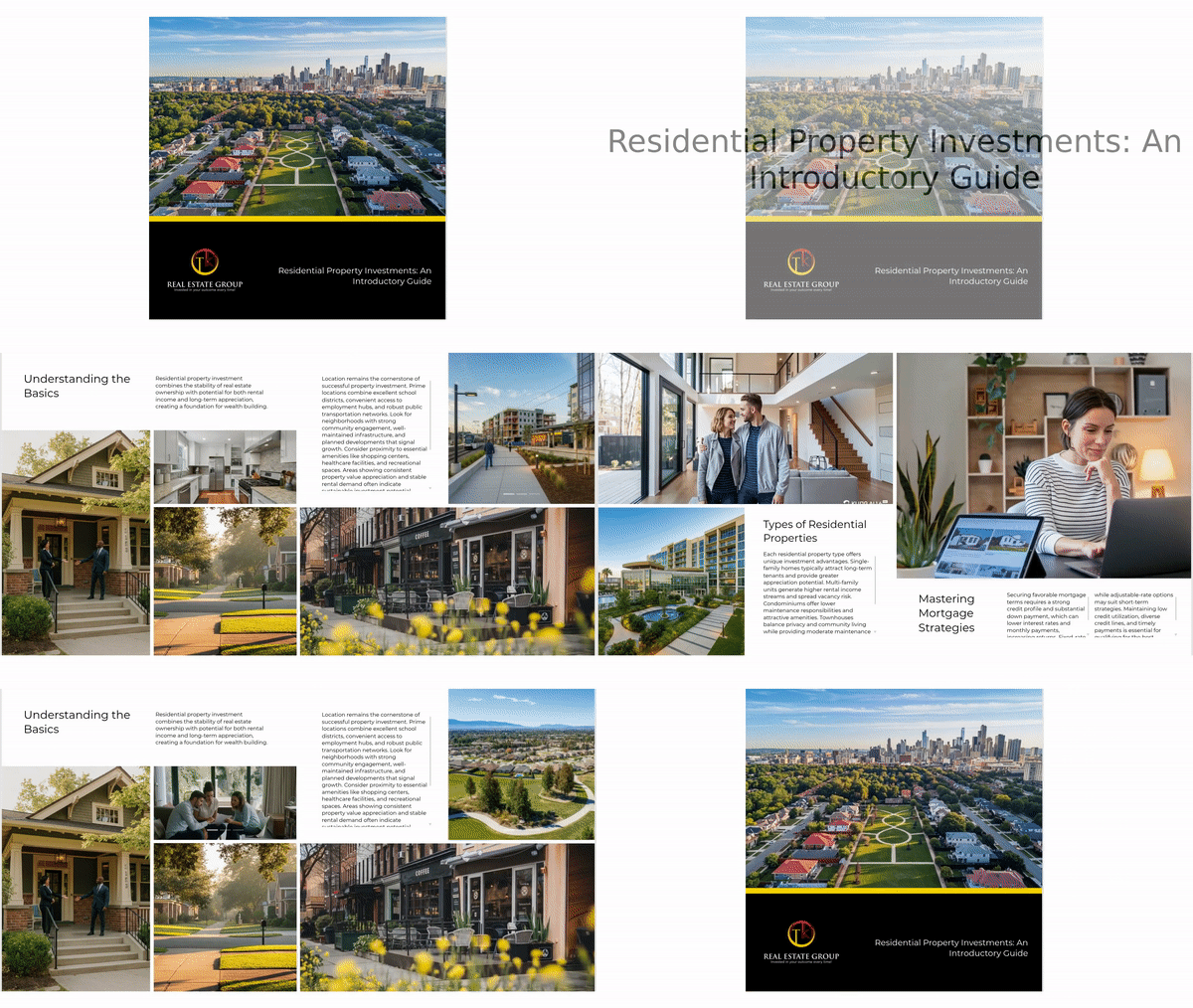
And now, to help you assess opportunity with clarity, take a look at our interactive storybook:
“Residential Property Investments: An Introductory Guide” (scroll down to view).
🎞 Storybook: Residential Property Investments – An Introductory Guide
This visual walkthrough gives you case‑studies, strategy outlines, and decision‑making tools to help you navigate your first investment property.
1. Define Your Investment Goals & Strategy
Before you buy your first retail property, you should clarify what you’re aiming for:
-
Are you seeking steady rental income, long‑term appreciation, or a mix of both? portlandrentalhomes.com+1
-
What’s your time horizon? Five years? Ten years? Beyond?
-
How much active management are you willing to handle?
By setting these goals early, you’ll avoid many of the common pitfalls first‑time investors face.
2. Location Matters (Especially in Oregon)
The Oregon landscape is diverse — urban Portland, vibrant suburbs, and regional markets each behave differently. According to reports, citylike Portland has strong rental demand and professional markets—key for your investment foundation. propmhomes.com+1
Prioritize:
-
Areas near job hubs or growing industries
-
High‑school districts and amenities (for family renters)
-
Markets where vacancy rates stay low and appreciation remains steady
3. Financing Your First Residential Investment
Financing makes or breaks an investment. For Oregon, the rules and numbers may differ from your primary‑home purchase. Key points:
-
Down‑payment requirements can be higher for investment properties. Steadily
-
Look into property‑type (single‑family vs duplex vs multi‑unit) and what rental model you’ll pursue.
-
Know your costs: repairs, maintenance, management fees, vacancy contingency. portlandrentalhomes.com
Your storybook gives a handy checklist for financing strategy, so you’re equipped before you make an offer.
4. Understand Cash Flow vs. Appreciation
Two major axes for real estate investing:
-
Cash Flow: monthly rents minus expenses
-
Appreciation: how much the property value increases over time
In Oregon, many smaller‑scale investors focus on properties where rental demand stays strong, and then benefit from value growth. Use metrics like “rent as % of purchase price,” “expense coverage,” and neighborhood growth trends. Investopedia
Your storybook includes sample scenarios so you can model both outcomes.
5. The Manage‑and‑Maintain Reality
Owning investment property isn’t passive unless delegated. You’ll need to think about:
-
Tenant screening and relations
-
Maintenance and repairs
-
Local landlord‑tenant law (especially in Oregon)
-
Property management or self‑management decisions
Good planning up‑front reduces surprises. Use the storybook’s checklist to anticipate what’s coming.
6. Mitigating Risk and Planning for the Long Game
Risk is real—but manageable. Some strategies:
-
Choose neighborhoods with mobility: easy to rent or sell
-
Budget for maintenance, vacancy, and upgrades
-
Avoid “flip only” mentality unless you have a short‑term plan
-
Understand the tax implications, depreciation, and exit strategy
The embedded storybook includes sample risk scenarios so you can see what to watch out for before you pull the trigger.
Frequently Asked Questions About Residential Property Investing in Oregon
What’s the best property type for a first‑time investor?
Many begin with a single‑family or duplex property in a good neighborhood. These have simpler management than large multi‑units and still offer strong rental demand. portlandrentalhomes.com
Do I need a large down payment to invest in Oregon real estate?
Yes and no. For investment properties, lenders often require higher down payments (often 20%+), but depending on property type and financing structure you might still leverage other strategies. Steadily
Is Portland still a good market for investing?
Yes—Portland and Oregon suburbs continue to interest investors due to job base, livability and tenant demand. But narrowing down neighborhoods and doing due diligence remains critical. propmhomes.com+1
How do I calculate if an investment is worthwhile?
Use tools like cash‑flow projections, rent as percentage of purchase price, expense models, and appreciation forecasts. Many use the 1% rule (rent = ~1% of purchase price) as a loose guideline. Investopedia
Should I hire a property manager?
If you’re not local or don’t want day‑to‑day involvement, yes. A good manager helps protect your investment and streamline operations.
Let’s Start Building Your Wealth Together
If you’re ready to take your first step into property investing—or you’ve started and want guidance on refining your strategy—let’s connect. I’ll help you evaluate opportunity, avoid common traps, and choose properties built for long‑term success.
Invested in your outcome every time!
Tamiko K. Warren | 503.515.9293
23+ Years of Real Estate Experience
Principal Broker | TK Real Estate Group | REAL Broker LLC
📧 [email protected]
🌐 www.tkrealestategroup.com
📅 Schedule a consultation today
📲 Instagram: @tamikopdxrealtor
👍 Facebook: TK Real Estate Group
📺 YouTube: @newhomesinoregon
📍 Serving Washington, Multnomah, Clackamas & Yamhill Counties